
The Power of the Calorie: What’s Changed and What Hasn’t in 100+ Years
Walk into a conversation about nutrition and fitness, and you're almost guaranteed to hear a familiar word: calorie. It's the currency of every diet, the unit of energy we obsess over, and a central figure in the health narrative. But have you ever stopped to think about where this concept comes from?
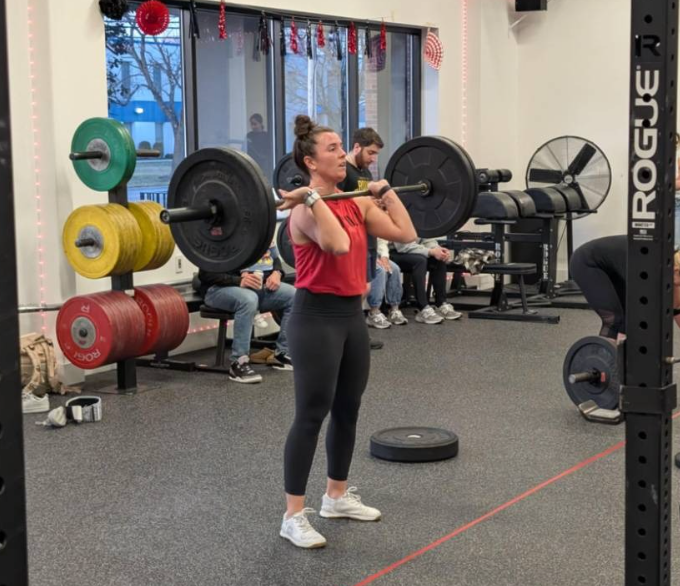
Here at CrossFit 201 in Oakland, NJ, we believe in understanding the "why" behind what we do. From the most fundamental movements in our programming to the basic principles of nutrition, knowledge is power. So, let’s take a journey back in time to explore the history of the calorie. As you’ll see, the core science is surprisingly old and has stood the test of time, but our modern application of that knowledge has evolved in crucial ways.
The Birth of a Unit: What Exactly is a Calorie?
In its simplest, most scientific form, a calorie is a unit of energy. Think of it like a kilowatt-hour for electricity or a gallon for fuel. It's a way to measure the potential energy contained within food.
Specifically, one calorie is the amount of heat energy required to raise the temperature of one gram of water by one degree Celsius. In the context of nutrition, we almost always refer to a kilocalorie (kcal), which is 1,000 of these little calories. So, when your food label says "150 calories," it's technically 150 kilocalories.
The Founding Fathers of Nutrition Science: Where the Calorie Came From
The quest to understand how our bodies use food as fuel is a story of pioneering scientists. Two figures, in particular, laid the groundwork for our modern understanding of the calorie:
Antoine Lavoisier: The Father of Metabolic Science (Late 1700s)
Long before the calorie was a household name, the French chemist Antoine Lavoisier, often called the "Father of Modern Chemistry," was the first to realize that animal respiration was essentially a slow form of combustion. In his famous experiments, he put a guinea pig in an ice-filled calorimeter and measured its heat production, linking it directly to its oxygen consumption. This groundbreaking work established the fundamental principle that our bodies release energy from food in the same way a flame burns wood—just a lot slower and more efficiently.
Wilbur Olin Atwater: The Father of American Nutrition Science (Late 1800s)
The figure most directly responsible for our modern understanding of the calorie in food is the American chemist Wilbur Olin Atwater. In the late 19th and early 20th centuries, Atwater built a revolutionary device: the human respiration calorimeter. It was an insulated chamber where he could meticulously measure a human subject's energy expenditure (by tracking oxygen intake and carbon dioxide output) while simultaneously measuring the energy content of the food they ate.
Through this groundbreaking research, Atwater discovered that the energy in food wasn't lost in the digestive process but was conserved and used by the body. This led to his most enduring legacy: the Atwater System or Atwater Factors. He determined that, on average:
One gram of protein contains ~4 calories.
One gram of carbohydrates contains ~4 calories.
One gram of fat contains ~9 calories.
This simple but elegant system, published in a USDA bulletin in 1896, became the foundation for all food labeling and nutritional tracking we use today.
The Enduring Truth: What Hasn't Changed in 100+ Years?
It’s remarkable that the core concepts discovered over a century ago remain valid today.
The Calorie is Still a Unit of Energy: A calorie is still, and will always be, a unit of heat energy. That fundamental physical property has not changed.
The Atwater Factors are Still the Standard: The 4-9-4 system is still the universally accepted method for calculating the caloric content of food. While there have been minor refinements for specific foods, the core principle holds true.
The Law of Energy Balance is Inviolable: At its most fundamental level, to lose weight, you must be in a calorie deficit (consuming fewer calories than you burn). To gain weight, you need to be in a calorie surplus. This law of thermodynamics is an enduring scientific truth.
The Evolution of Our Understanding: What Has Changed?
While the core science of the calorie has not changed, our understanding of the human body and nutrition has become infinitely more sophisticated. This is the crucial modern nuance that guides our approach to nutrition at CrossFit 201 in Oakland, NJ.
Not All Calories Are Created Equal: We've moved beyond the idea that a calorie is just a calorie. The source of those calories matters immensely.
Thermic Effect of Food (TEF): We now know that your body burns more energy simply to digest and absorb protein than it does for carbohydrates or fats.
Hormonal Response: A high-sugar, low-fiber meal with 500 calories will trigger a very different hormonal response (e.g., a large insulin spike) than a 500-calorie meal of lean protein, healthy fats, and fibrous vegetables. This hormonal difference impacts everything from hunger and satiety to fat storage.
The Rise of Macronutrient Ratios: Modern nutrition science, and the CrossFit methodology, emphasizes the importance of macronutrient ratios. The right balance of protein, carbs, and fats is key for optimizing body composition, fueling performance in a WOD, and supporting recovery, regardless of the calorie count alone.
The Importance of Context and Food Quality: Today's nutrition science acknowledges that 100 calories from an avocado and 100 calories from a candy bar are not the same. The avocado provides micronutrients, fiber, and healthy fats that the candy bar lacks, leading to greater satiety and long-term health benefits. We now understand that focusing on nutrient-dense, whole foods is paramount, a principle that drives our new Nutrition Coaching program for our community in Oakland, Franklin Lakes, Wyckoff, and beyond.
The CrossFit 201 Takeaway: Honor the Past, Embrace the Future
The calorie is a simple, elegant unit of energy measurement that has served as a bedrock for nutrition science for over a century. The basic principles of energy balance and the Atwater factors are still valid and foundational.
However, the real power lies in our modern, more nuanced understanding. At CrossFit 201, we apply this knowledge not just to count calories, but to focus on food quality, macronutrient balance, and creating sustainable habits.
We help you understand that while calories matter, where they come from matters just as much for building a strong, healthy, and resilient body.
Ready to simplify your nutrition and focus on what truly works? Talk to our coaches about our nutrition resources and how we can help you take control of your health journey.
LINK: 201 Nutrition Coaching
LINK: Free Nutrition Resources


